Abraham was the father of the Hebrews, he was the one that God spoke to and told to leave Ur and move to the promised land of Canaan. The Hebrews were monotheism, so they belived only in one god, as Abraham tought them. Then come the tribes, and Judaism comes from the name of one of the 12 tribes named after sons and grandsons of Abraham. In Canaan the hebrews were Caled Israelitis and stayed like that. Then a time period came called exodus, when they left Canaan and whent to Egypt but got as slaves there. Then when they got free god gave them the Ten Commandments of what to do right and what not to do.Than they were lost in the desert for 40 years, and when they came back their promised land was tachen. So they started a war that was almoust 200 years. Than when the war stopped the tribes divided into 2 parts. Each part had their kings and judges that helped them and they asked advice. Also, one more time god spoke to Abraham. So because god spoke to him, Abraham tought it to the people, and they belived him.
Sunday, March 29, 2015

EO7 Change in Jewish belief
The Jewish people came bavk to their religion, they praid, had their holy days that they celebrated. also then they came back to their land and rebuild their holy temple. Then they were looking to have another king to rule over them and lead. They had special people who they asked advice to, which helped them to solve problems. Also some of them wher talking to god.
Stomp that Revolution.
Laura Reis
I Unit #EO7
Mr. Brown
29.03.2015
Comparing and contrasting means thinking about similarities and differences. Two or more concepts are grouped together because of shared features, but they are distinguished from one another by other features. As you read lesson 10.3, think about ways in which Syrians and Romans differed in their treatment of Jewish rebellions.
Syria only
|
Rome only
|
Both
|
Syrians weren’t as strict as the Romans.
The jews were not allowed to study the Torah, it was like a crime.
The Jews were allowed to follow their own religion.
|
They let the jews have own leaders, but they would choose them, not the jews.
There was still the Jewish school
Titus burned the Jews temple
They were very very strict to Jewish people.
|
They were the rulers over the Jews.
|
- Who tried to impose Greek culture and beliefs on the Jews?
A Hebrew priest killed a Greek because he tried to make him as a victim for the Pagan god.
- Who forced the Jews to move out of Judea?
The Romans in 135A.D and the Babylonians in 586 A.D. the babylonians were first.
- Who used force to put down Jewish rebellions?
In 70 A.D Titus put down the Rebellion.
E07-Effects of Syrian and Roman control
Thee changed them by scaring them from their religion, and if they would not obey, the Jedaic people, they were scared that there would be no other religion or people like them. And if the Judaic people would not obey they would destroye their temple, their holly place. The most off all is that because of the Jedaic religion and belief there were tacken as slaves and they didnt whant to let their religion go, so that separated them. If for the time they would obey just what the syrians wouold say, they would be alive and not tacken as slaves, but they were true to their religion and who they are. This made their religion strong, and even after the time of slaves they got free, they believed still in their religion.

Tuesday, March 17, 2015
10 Commandments vs. Hammurabi's Code
Essential Questions: Why do societies need laws? Where do laws come from?
Focus Skill: Collaborative Conversations
In the book of Exodus (in the Hebrew Bible, also known as the Torah) the Israelites stopped at the foot of Mount Sinai and Moses went up the mountain to meet with God. Moses came down the mountain with two stone tablets that are ten laws. The Commandments and other laws told the Israelites how to behave towards God and one another. These laws are still important to Jews and to many other people today.
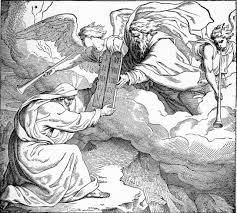
(Source Document) The Ten Commandments
1. I am the Lord thy God... You shall have no other gods before me.
2. You shall not worship false idols…(Not worship other things)
3. You shall not take the name of the Lord thy God in vain...
4. Remember the Sabbath day to keep it holy.
5. Honor thy father and thy mother...
6. You shall not kill.
7. You shall not commit adultery.
8. You shall not steal.
9. You shall not bear false witness against thy neighbor (lie).
10. You shall not covet (desire)... anything that is thy neighbor’s.
Practicing Collaborative Conversations
Directions: Before you practice your collaborative conversations in 
your group, write down THREE Commandments in your own words
and why do you think they are important to a Civilization or Society.
Directions: Pick 3 Commandments and write them in YOUR OWN WORDS. And explain why you think they are important.
- You need to honor and respect your mother and father, the two people who gave life to you. It is important you respect the people who gave life to you and cared for you when you were growing up.
- You will not kill. Killing is never the answer, and should not be done whether you’re religious or not.
- You do not steal. Stealing is a very bad thing to do, for you take stuff without asking for permission, which you didn't work for to deserve it and which other people might need more than you.
Essential Questions: Why do societies need laws? Where do laws come from?
Skill Focus: Supporting ideas from examples in the text
Introduction: Laws are a complex institution of civilizations. They are designed to do many things—settle conflicts between individuals, provide citizens with guidance on proper behavior, and outline an individual’s relationship with the government. Thus, laws are important for building stable civilizations.
You will compare and contrast Hammurabi’s Code and Excerpts from the Torah (The old testament). Answer the questions below.
Source: Hammurabi’s Code (1775 B.C.)
If a son has struck his father, they shall cut off his hand.
If a [noble] has destroyed the eye of a [noble], they shall destroy his eye.
If he has broken another [noble’s] bone, they shall break his bone.
If he has destroyed the eye of a commoner or broken the bone of a commoner, he shall pay one mina of silver.
If he has destroyed the eye of a [noble’s] slave or broken the bone of a [noble’s] slave, he shall pay one- half [the slave’s] value.
If a [noble] has knocked out the tooth of a [noble], they shall knock out his tooth.
If he has knocked out a commoner’s tooth, he shall pay one-third mina of silver.
|
DOCUMENT-BASED QUESTIONS
1. In your own words (paraphrase) some of the laws written in Hammurabi’s Code.
A lot of the codes written in the Hammurabi code consequences are the same as the rule broken. For example, if a noble destroyed the eye of another noble, than the other noble gets to do the same to the noble (destroy his eye.) There is some form of karma, so for every bad deed you do a bad deed comes to you, whether its injury, death or you pay back something.
2. Is the Code applied equally to all people? Explain your answer.
No. In my opinion the code isn't fair. A lot of this is not fair to all the people. For example, if someone believes a woman is a witch she dies either way without getting her own word. I only noticed the code punishments aren't as bad to higher class people to lower class people. The code does not apply equally to all people.
|
Essential Questions: Why do societies need laws? Where do laws come from?
Skill Focus: Supporting ideas from examples in the text
Source: Old Testament (Part of the Torah) (around 600 B.C)
Whoever strikes a man so that he dies shall be put to death. But if he did not lie in wait for him, but God let him fall into his hand, then I will appoint for you a place to which he may flee. . . .
Whoever strikes his father or his mother shall be put to death. . . . Whoever curses his father or his mother shall be put to death. When men quarrel and one strikes the other with a stone or with this fist and the man does not die but keeps his bed, then if the man rises again and walks abroad with his staff, he that struck him shall be clear; only he shall pay for the loss of his time. . . .
When a man strikes his slave, male or female, with a rod and the slave dies under his hand, he shall be punished.
When a man strikes the eye of his slave, male or female, and destroys it, he shall let the slave go free for the eye’s sake. If he knocks out the tooth of his slave, male or female, he shall let the slave go free for the tooth’s sake.
|
DOCUMENT-BASED QUESTIONS
1. Describe some of the punishments of these laws.
If you don’t respect (kill) people around you, you die
If you don’t respect your parents you die
If you hurt a slave you shall let the slave go
2. How is the treatment of slaves in Hammurabi’s Code and the Old Testament laws similar? How is it different?
Both of the laws represent justice as Revenge. In both the laws you had to respect people around you.
In Hammurabi’s code, If you hurt a slave. The slave can’t leave. Instead the slave gets to hurt you the same way you hurted it.
Both of the laws are very similar
|
- On page _________, it said….
- The author wrote…
- According to the text….
- From the reading, I know that…
- Based on what I read…
- For example…
Visual Study Guide
Directions: Read the question or statement and fill in the blank below

According to ancient Hebrew history, who made the first covenant with god, which promised the Hebrews the Promised Land? Abraham
| 
The belief in ONE God which is one of the central beliefs of Judaism is called Monoth
| 
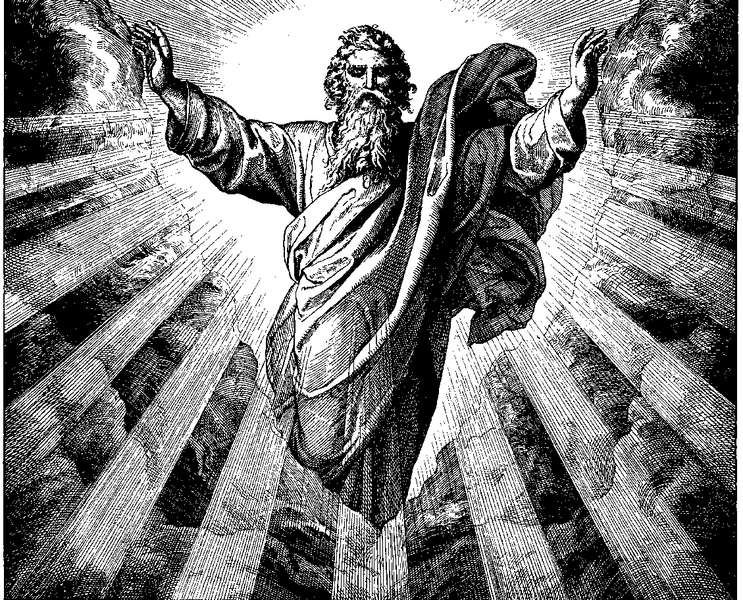
According to Jewish scripture God’s laws were delivery by whom? Moses
|
Abraham
|
Monotheısm
|
Moses
|
Abraham met god and told his people (the Hebrews) about the promise land
According to Jewish Scripture God gave these laws to the Hebrews. (what are the laws called?)
| 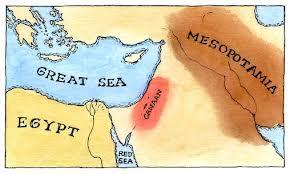 
What is the “promised land” called that God promised Abraham and his people? Canaan
(Hint: Between Egypt and Mesopotamia)
|
Moses led the Israelites from Egypt. This event is also called the Exodus
|
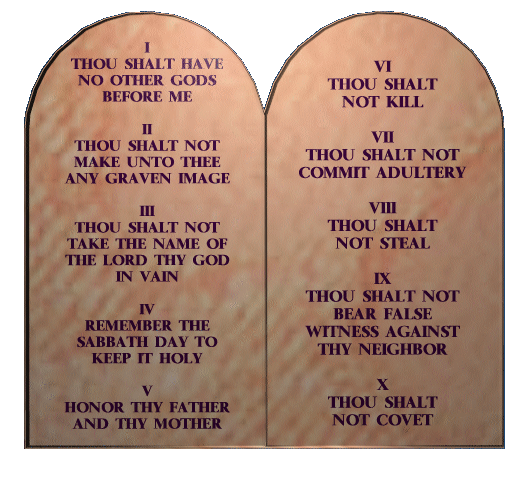
The ten commandments
|
Passover
|
David
|
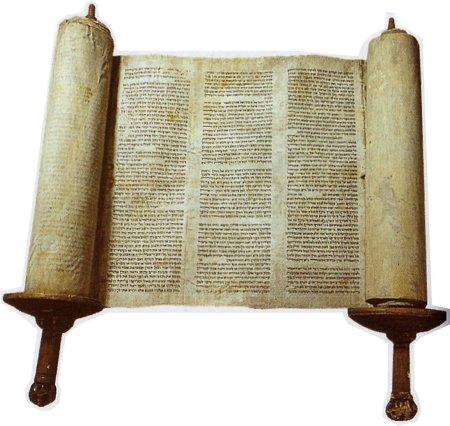
Ten commandments were made by Moses. Moses climbed to the top of Mount Sinai where God spoke to him. When he came down the mountain, he carried 2 stone tablets that contained the Ten commandments. These commandments became the basis for the laws of the Israelites. The commandments later became an important part of the moral and ethical traditions of western civilization.
| 
A Jewish holiday that remembers the Exodus
The Torah tells of a terrible famine in Canaan. The starving Israelites went to Egypt, where Jacob’s son Joseph served as top adviser to Egypt’s pharaoh. In time, a new pharaoh came to power. He enslaved the Israelites. And Moses helped the Israelites leave Egypt. Exodus is the migration of the Israelites from Egypt. And passover is a Jewish holiday that remembers the Exodus.
|
2nd King
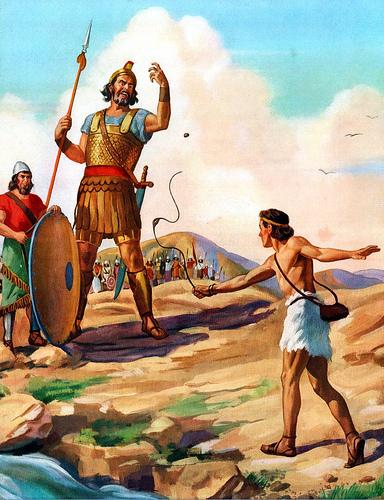
of the Israelites
who brought to-
gether the 12
tribes of Israel
The first king Samuel chose a young man named David as the next king. The choice was a wise one. in about 1000 B.C. David and the Israelites drove out the Philistines. David won control of Jerusalem.
|
Wednesday, March 11, 2015
10.3 cornell notes
Name: Laura Reis
|
Date: 11/03/2015
|
Topic: Cornell Notes 10.3 Rome and judea
|
Class/Period: I
|
Essential Question:Why did they not train their people good to fight?
|
Questions/ Vocab, etc.
|
Notes
|
their temple.
|
Summary:The Jews did not have a strong army, so they were beaten. First they got as slaves by the Assyrians. They took control over them, destroyed their temple. Than a Jewish priest came and took his 5 sons and started a battle and won the land back. After somewhere around 100 year the romans came and started ruling over them. They didnt allow them to follow their religion, but they could have Jewish kings, which were still under the rule of the romans. Than some of them tried to free them from romans, but the other didnt because they were afraid that they would destroy their temple. After some time they did destroy it, then the Jews were afraid to loose the power of being who they are, but their leaders and teachers made a way to prevent it. They build places were they could pray, and they would read the Torah. After Jerusalem was freed they build schools to learn about Torah and prayers of their faith.
|
Subscribe to:
Posts (Atom)